Knowledge check with explanations

Feces & Bodily Fluid Cleanup quiz and study guide

Find out what you already understand, then read the parts you missed.

The quiz on this page checks how well you understand what happens after a sewage backup, a waste buildup, or a fluid-soaked floor in a home or rental. It is not a test you can really fail. The goal is to find gaps before they cost you money or expose someone to germs. For example, you might think a bleach mop handles a toilet overflow. Or you might think a rental can be turned over with a carpet shampoo. Each question ties back to an idea in the study guide below. So if an answer surprises you, the explanation is one scroll away. Take the quiz before you call a company, and again after you read the guides.

Get an email reply about feces & bodily fluid cleanup

Send a short message to the follow-up inbox. A coordinator can reply by email. This form does not send emergency help; call 911 first if anyone is in danger.

Tell us what you need help with. Share a short description; please leave out medical details, access codes, and other sensitive information.

A request does not confirm a booking. For immediate danger, contact local emergency services.

Or email info@prompartybuses.com

You will get the most from the quiz if you have a real situation in mind. Picture the room, the material, and how long the problem went unnoticed. Then answer as if you had to decide today. The 15 questions cover what to do first when sewage backs up, and how to tell a mess you can clean from one that needs a crew. They cover why cleaning and disinfecting are separate steps, and why walls and carpet pad sometimes have to come out. They also cover how to judge a company, what insurance may ask for, and who a renter should tell first. Scores are private and are not stored with anything that identifies you. Take it as often as you like. The goal is confidence in your questions, not a perfect score.

Feces & Bodily Fluid Cleanup knowledge check

15 questions about real feces & bodily fluid cleanup situations: staying safe, what happens, cost, choosing help and the rules. Every answer comes with a short explanation.

Why this quiz matters

Knowing these basics makes it easier to spot bad advice and ask a company the right questions. This quiz is educational — it does not certify anyone. After the quiz, review the explanations for questions you missed. For professional guidance on your specific situation, use the contact form at the top of the page for an email reply.

Progress1 / 15
SafetyQ1

Sewage is bubbling up from the basement floor drain. What should everyone in the house do right away?

Study guide: the six ideas behind the questions

Read these before or after the quiz. They cover the concepts every question draws on, written for feces & bodily fluid cleanup specifically.

1Recognizing when a mess becomes a hazard

One spot of vomit on a hard floor and a bathroom that overflowed into the hall carpet may look like the same kind of problem. They are not. The dividing lines are amount, material, and time. Small amounts on hard, sealed surfaces can be handled with household methods and care. Some cases cross into a zone where germs in the air, ammonia, and hidden pockets of contamination are real worries. These include anything that soaked into carpet pad, subfloor, or drywall. They also include anything with sewage, and anything that sat long enough to dry and turn dusty. Watch for floors that curl up at the edges and stains that spread past the visible source. Watch for odor that gets stronger on humid days. Those signs mean the mess spread farther than you can see.

2Authority and access: who decides and who may enter

Before cleanup starts, someone must have the right to make choices about the property. In a home the owner lives in, that is simple. In a rental, the lease, state landlord-tenant law, and local rules control notice, entry, and who pays. Those rules vary by state and county. Empty or foreclosed homes may involve a bank, a lawyer, or a court order. Squatter cases may need police before a crew steps inside. Home care accidents may involve an agency's own steps. Work out who owns the choice, who must be told, and who is allowed in the affected rooms. Then put that in writing before any material is removed or thrown out.

3Containment: keeping one room from becoming the whole house

Germs move on shoes and tools and through air currents. Gravity also pulls them into the floor layers and the unit below. Containment means blocking all of those paths. Close the door to the affected room. Tape off the heating and cooling return vents so the system does not pull odor and particles into other rooms. Lay throwaway coverings on walking paths. Keep pets and children on the far side of the barrier. Companies add to this with air filters and plastic walls that keep dust inside the work area. They also set a clear path from dirty to clean areas. If you must go in before help arrives, wear throwaway gloves and shoe covers. Do not carry anything out, and wash well afterward.

4Cleaning is not disinfecting, and order matters

Disinfectants are tested on clean surfaces. Waste, vomit, and urine residue shield germs and use up the active ingredient. So spraying a dirty surface does very little. The right order is to remove the bulk of the mess first. Next, clean with soap or an enzyme cleaner that breaks down the mess. Rinse if the label says to. Only then apply an EPA-registered disinfectant. Leave it wet for the full contact time printed on the label. Sewage and cases with C. difficile may call for sporicidal products. These are a special type made to kill bacterial spores. Never mix bleach with strong urine stains, which hold ammonia, or with other chemicals. The mix can give off toxic gas. A company should be able to name each product and what it is for.

5The waste path: where everything goes

Everything taken out of the room has to go somewhere. The rules for that are not the same as for regular trash. Soaked carpet, pad, drywall, and belongings may count as contaminated debris under state or county rules. Some places require special bagging, labels, or a licensed hauler. Needles found during the work go into hard, puncture-proof containers, never loose bags. Liquid waste is never poured into storm drains or yard soil. Medical waste rules mostly apply to health care settings. But local agencies decide how biohazard debris from homes is handled. So check with the county solid waste office or health department. Ask the company to describe where the waste goes in the plan. Ask them to keep receipts or waste shipping records.

6Documentation and verification protect you later

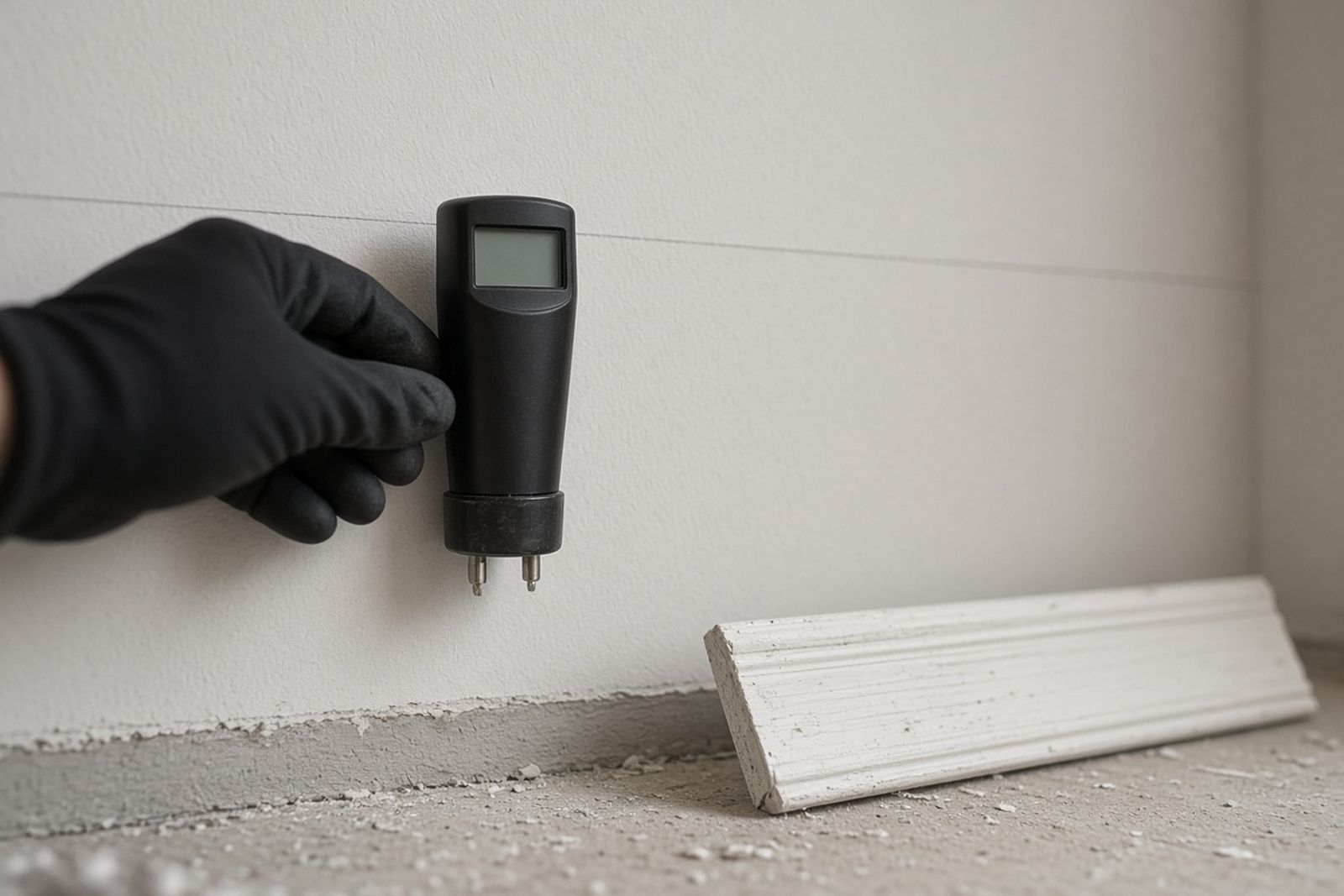
The paper trail matters as much as the cleaning. Before work, take dated photos of every room. Note the cause if known and keep any plumber's report. During work, collect moisture readings and a list of what was removed and what was cleaned. Get product names, EPA registration numbers, and contact times. After work, get final moisture readings that show materials are dry. Get any surface testing the company offers. One example is a quick swab test that shows leftover organic residue on hard surfaces (it does not detect germs). Also get a written statement of what was done. Landlords need this for deposit disputes. Owners need it for insurance and when they sell. Everyone needs it if odor comes back months later. Checking the work means comparing results to the plan, not accepting a spoken all-clear.
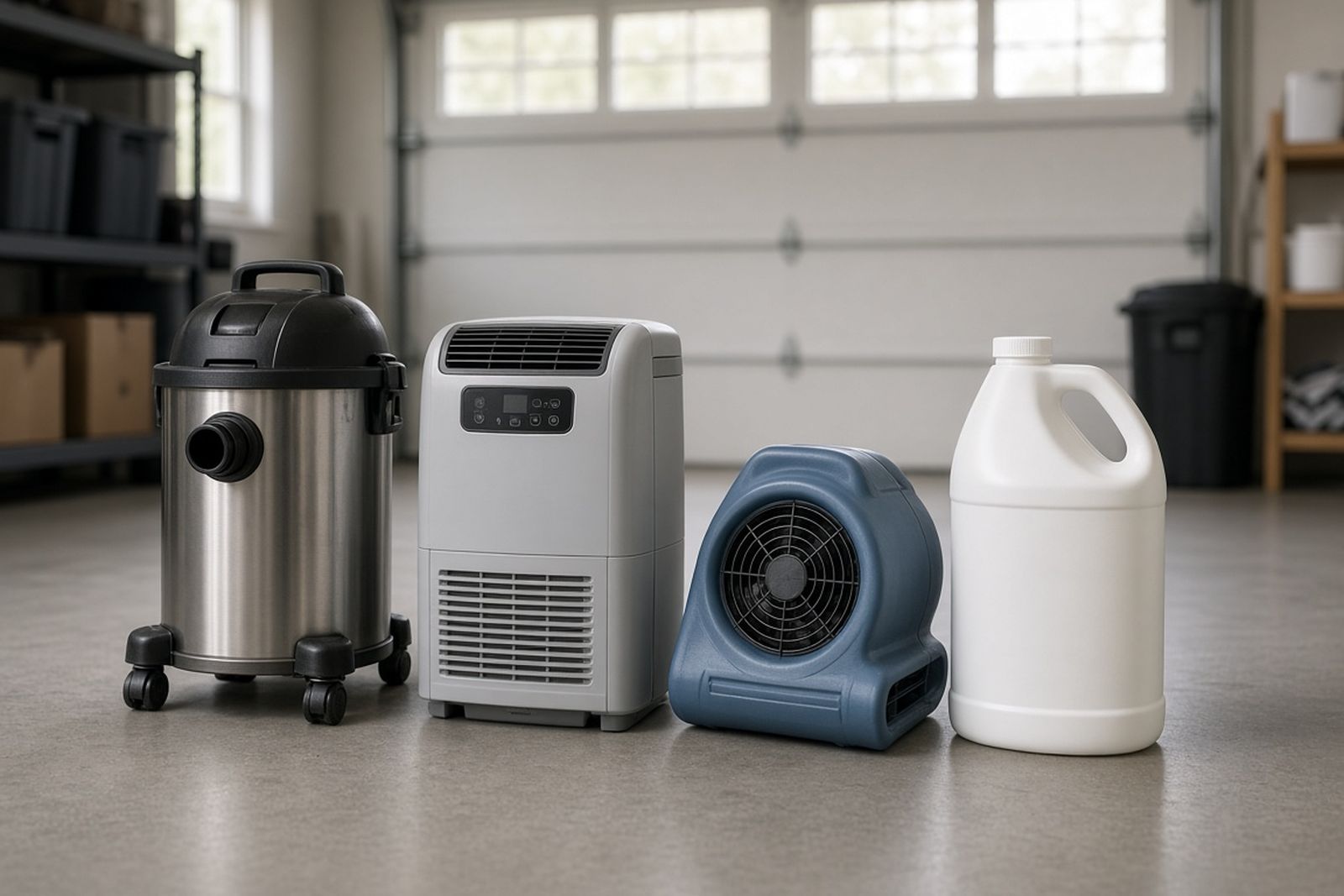
Wet vacuum, dehumidifier, air mover and disinfectant jug staged in a garage
Illustrative photo, not a job record. Wet vacuum, dehumidifier, air mover and disinfectant jug staged in a garage.

Feces & Bodily Fluid Cleanup facts the quiz draws on

55%

55% of 161 residents answering the home-damage follow-up reported mold growth.

Read with care: 31% response; self-report; mask terminology broad; Katrina comparison involved different samples.

Source: Foreman et al. (2024)238 residents and 68 mold-remediation workers near New Orleans; mostly recruited outside home-improvement stores.

50

50 participants undertook mold or water-damage cleanup.

Read with care: High-risk clinical sample; no infection probability inferred.

Source: Chow et al. (2019)103 immunosuppressed Houston residents surveyed after Hurricane Harvey, 2017.

43%

43% reported at least one physical health problem after the flood.

Read with care: Self-reported four-month outcomes; event-specific associations.

Source: Collins et al. (2013)475 respondents whose homes were damaged in the 2006 El Paso flood.

~110 products

EPA's List K of disinfectants proven to kill C. difficile spores includes about 110 products with required contact times of 1.5 to 10 minutes.

Read with care: Far fewer products kill spores than kill norovirus, so product choice matters.

Source: US EPA (2026)US-registered products, list updated June 2026

These figures are public research and agency data, not this network's own job records. Keep each number with its population, year and limits; none of them predicts cost, timing or outcome at a specific property.

Questions about the feces & bodily fluid cleanup quiz

How long does the quiz take?

Most people finish in a few minutes. Questions are multiple choice and each one shows a short explanation after you answer, so the time depends on how much of the reasoning you read. There is no timer. If you get interrupted, your progress stays in your browser until you close the tab, so you can come back to the question you left.

What topics does the quiz emphasize most?

The quiz leans most on the ideas behind the costliest mistakes. These are telling cleaning apart from disinfecting, knowing when flooring is past surface treatment, and knowing what a written plan should include. Questions about handling waste and landlord records appear too. Nothing on the quiz asks you to memorize a rule. It tests your judgment about home and rental situations.

Is a high score a substitute for calling a provider?

No. A strong score means you can ask better questions and spot a thin work plan. It does not prepare you to judge how wet a subfloor is, run drying machines, or bag debris under county rules. Use the score to decide how much of the talk you can lead. It also shows where you still need a pro's inspection results.

Why are some answers marked as depending on the situation?

In this field, many right choices depend on facts you gather on site. These include the water category, how long fluid sat, what the material is, and who has authority over the property. The quiz rewards you for seeing when a question cannot be answered without that information. That habit carries over to reading company quotes, where an honest answer often starts with a condition.

Can I share my result with a landlord or family member?

Yes. The results page can be printed or saved as a PDF. It includes the explanations for any question you missed. Some readers use it to get a spouse or a co-owner on the same page before hiring anyone. The result holds no personal information, only the answers you chose and the explanations.

Does the quiz cover pet waste and animal buildup?

It does. Pet urine that reaches padding and subfloor is one of the most common home problems in this area. A question explains why shampooing the carpet often fails, and why the smell comes back when the air is humid. Another covers why a crew may cut into the bottom of the drywall after liquid sat against it. Tell any company about the animals and which rooms they used, so the crew knows where to check for moisture.

Where do the quiz explanations come from?

Explanations draw on cleanup industry standards for dirty water and EPA rules for disinfectant labels. They use OSHA's bloodborne disease standard at 29 CFR 1910.1030 where it shapes worker safety. They also use public health guidance on gut germs. Where practice varies by state and county, the explanation says so instead of making up a rule.

What other visitors think

Poll results

Every count is a real visitor vote; nothing is seeded or padded. One vote per poll per device, and you can change your answer.

Your experience

When you discovered a sewage backup or waste problem at home, what did you do first?

No visitor votes yet
Process

How did you decide whether soaked carpet could be saved?

No visitor votes yet